I should begin with a caveat. I loved this field season and I’m NOT here to scare you. Additionally, fieldwork experiences will vary and my words aren’t gospel. However, it is important for me to tell you what you’ll be up against. Glacier ice in the ablation zone fractures and breaks underneath you, where narrow cracks rip through the camp site. You’ll be acutely aware of the mountains growing larger as ice slides toward them. Whatever touches the ground becomes wet. The ice ablates around your tent. The risk of slipping and falling is real, and you must double – no, triple – check everything you do. You must also understand that if, during your midnight pee-run, you walk into the near-invisible alarmed bear-fence, you will have a squad of heavily armed scientists pointing rifles at you within seconds, so do not forget to pack a piss bottle.
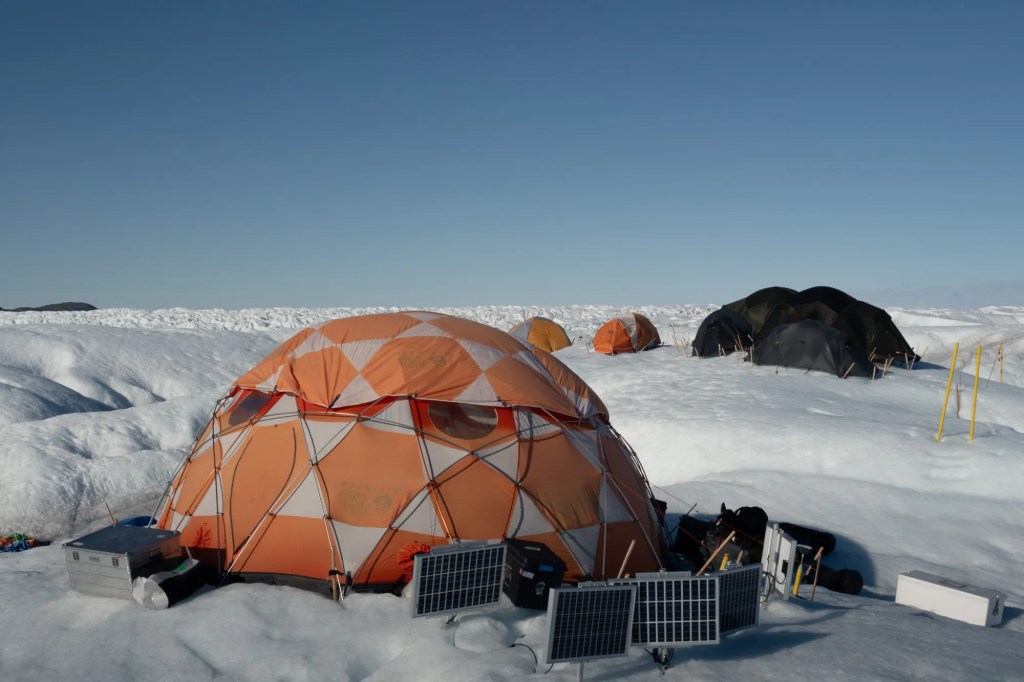
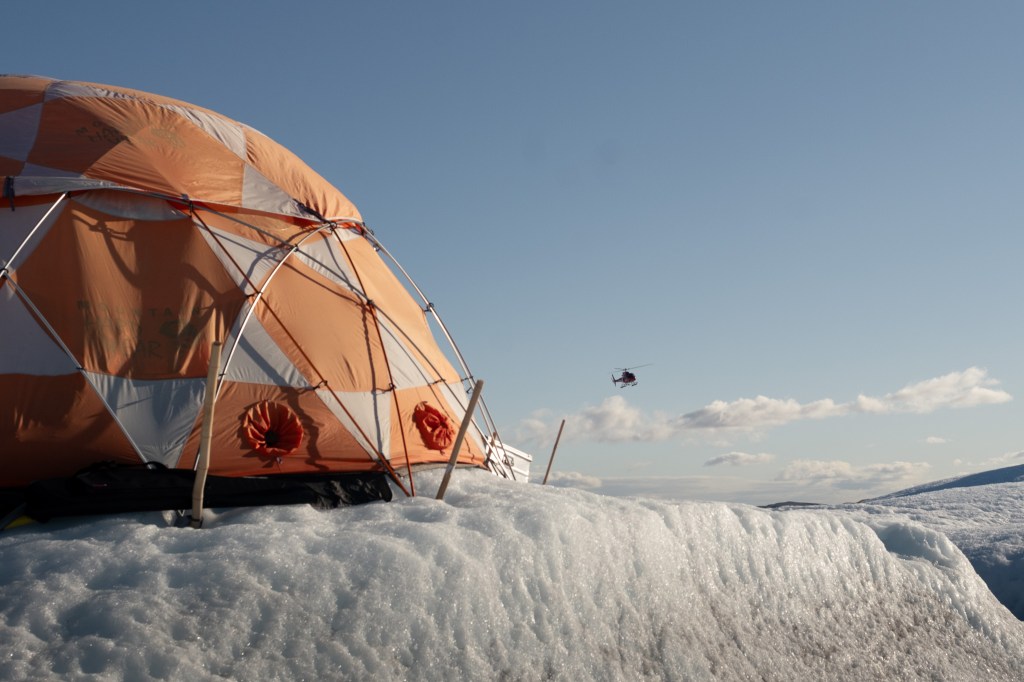
Wide view of ice camp (left), and the mess tent (right).
Safety can often be a chore, but when the theme park attendant folds the safety bars over your shoulders, you never wonder “what’s the worst that can happen?”. You’re sitting front row of a ride called “Skull Smasher 6000” – you KNOW the risks… Glaciology fieldwork in Greenland is similar, but “the worst that can happen” is a hungry polar bear sauntering into camp while you’re asleep, or you losing your footing and falling into a crevasse. Camping and working on a glacier is fun in the same way that roller coasters are. Trust your safety bars – the countless training courses that your supervisor sent you on. You will always be aware of the danger, but if you are adequately prepared, it’ll be the thrill of a life time.
In the same way that open water inspired some of our great horror stories, superstitions and poetry, open ice is similarly eerie. Your eyes will play tricks on you – is there something moving in the distance? Supraglacial streams whisper to each other, and sounds carry non-linearly around the ice dunes. However, there is a coarse beauty to endless ice like a rough woollen blanket under the horizon. The midnight golden hours are vivid where the sun doesn’t, but sets down under the horizon, leaving ribbons of red, orange, pink and blue. Although work days can be hard and long, and you may lose track of time as the days roll into one, you are always surrounded by a seemingly infinite, unparalleled beauty.
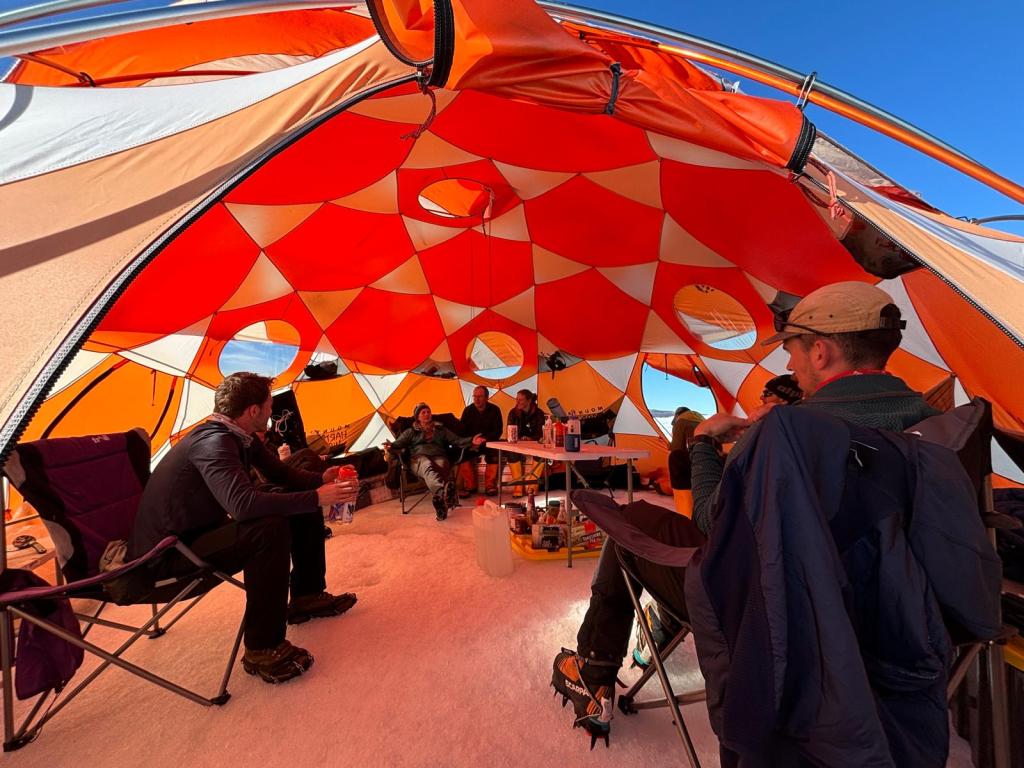
Let me walk you through a typical day. Every morning at 0730 hrs, I struggle out of my sleeping bag like a newly-caught fish in a bucket, and slip into unwashed thermals. Puffy faced, I say “good morning” to my equally haggard and similarly disorientated tent-pal, not quite sure if I’m lying. Equally undignified is my ritual wrestle with the tent door, and the struggle to cram cold toes into colder boots without impaling myself on my crampons. I emerge from my tent onto the ice and greet the polar air and the near biblical views. Despite the near crippling cold I wasn’t lying, it is a good morning. Ice camp was a hazardous nest of black, beetle-back tents, bamboo poles and guy lines, spread out unevenly over the ice and bound by an alarmed bear fence. The only way in and out is a narrow gap in the fence, through which you must shimmy. Downwind from the camp was the bright orange mess tent, large enough for our fellowship to comfortably sit together. Scattered around were collections of aluminium and black plastic boxes. In the distance was a small workman’s tent with a box camping toilet.
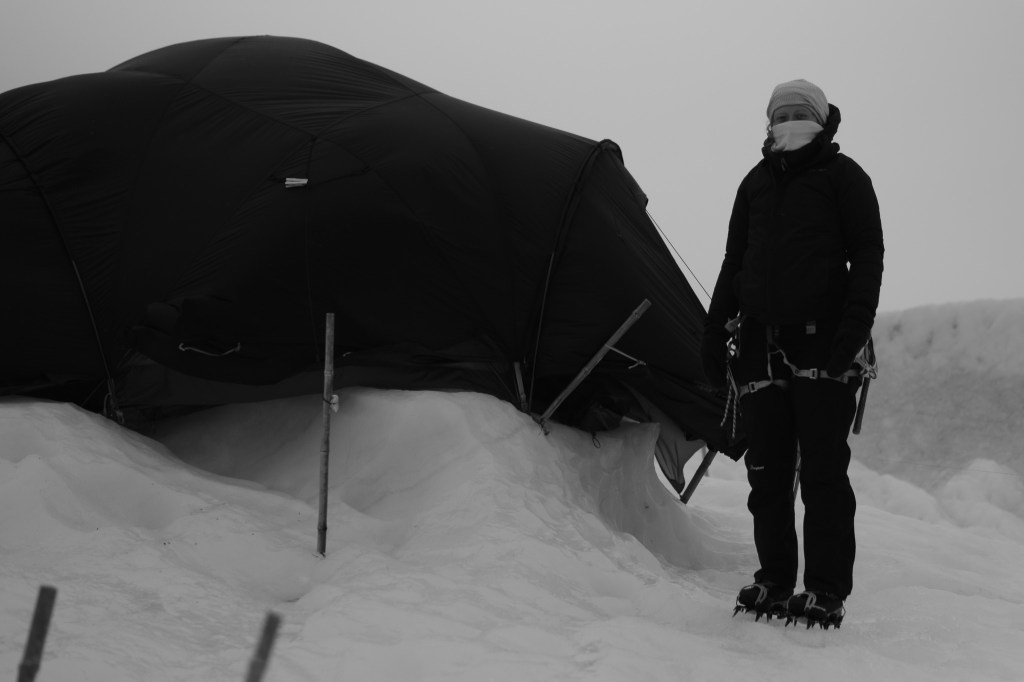
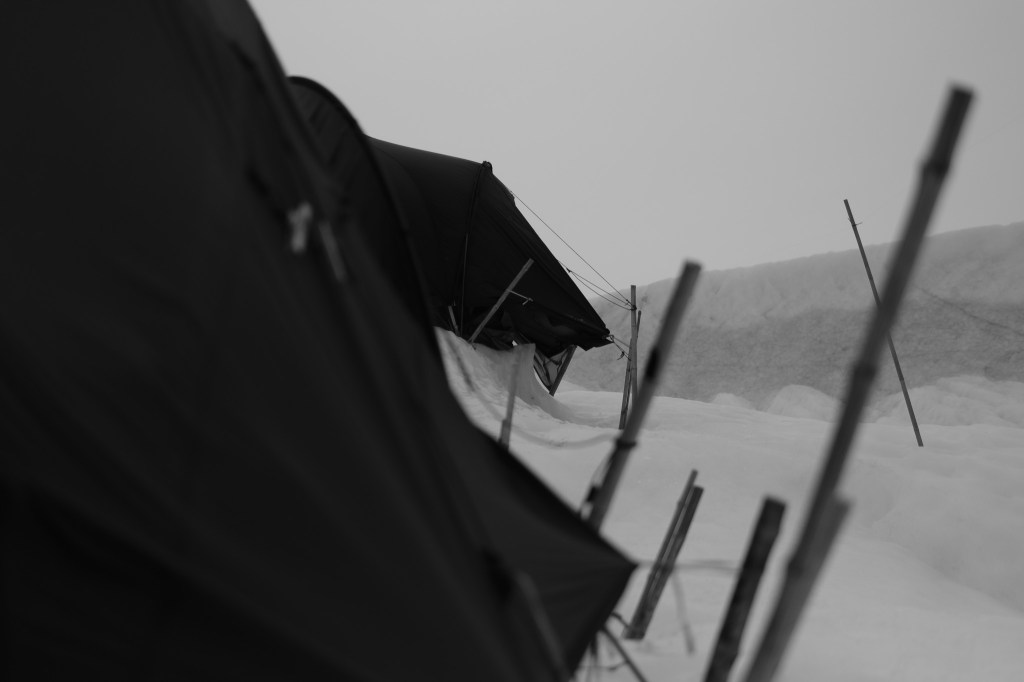
In the mess tent – breakfast is almost certainly porridge, ideally at a 1:1 ratio with half-frozen Nutella or, if your name is Mike Prior-Jones, some mango curry sauce. Your body requires additional calories to stay warm so, despite what your parents may have told you, shovelling Nutella from the jar is socially acceptable. Coffee from a French press is also non-negotiable, however I understand that you might not be so lucky as to have had a couple tonnes of equipment helicoptered onto the ice for you, so instant coffee is good too. There is no judgement on the ice – I left that in Copenhagen, so anything goes. After bargaining with my camp mates over use of the toilet, and a fierce battle with your harness, I’m ready to go!
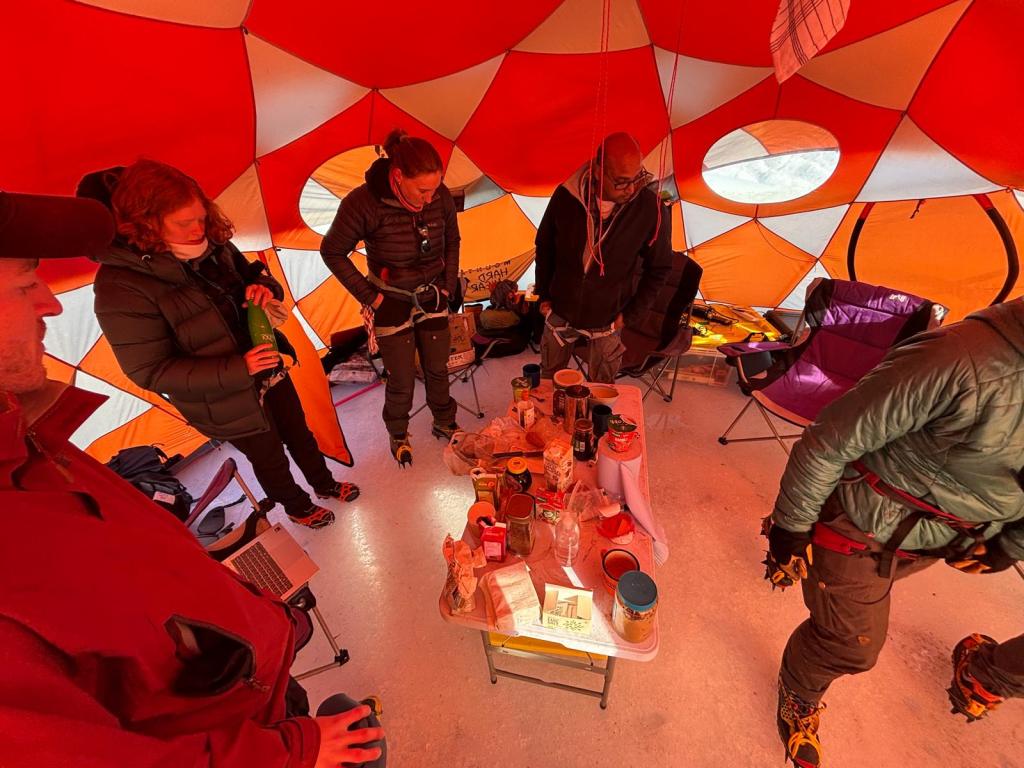
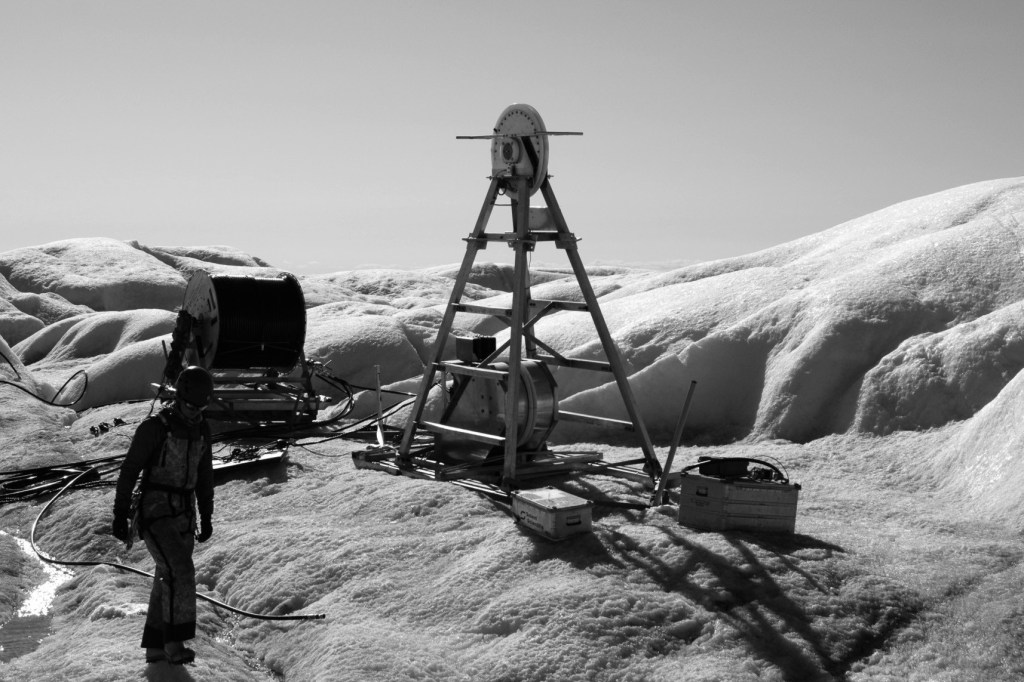
If you’re lucky to be on a hot-water drilling campaign like I was, you’ll never be short on opportunities to stay warm. Drilling equipment is heavy, and a morning lugging hoses and pressure washers will keep you warm. After a morning of manual labour (science is hard), we’d sit down for a lunch of tinned mackerel and dry rye crackers, followed by handfuls of Haribo and chocolate. I wasn’t picky, in fact I was extremely grateful; the skies are clear, the air is fresh and we’ve all worked very hard.
After an afternoon of more manual labour, I’m back at camp for dinner. We’d take it in turns to cook and wash up, in a semi-regular rota. Lets say its near the end of our run on the ice, and we’re down on fresh ingredients like potato; dinner is, with near certainty, rice with a tomato based stew, made in a nightly menu rotation of Indian style/ Mexican style. Regardless of who you are or where you’re from, when a hot bowl of fresh food is served to you, shut up and eat as much as you can. This isn’t a buffet, nor is it The Ritz, but you will be grateful that you’ve eaten so much when your metabolism is keeping you warm in your sleeping bag at night.
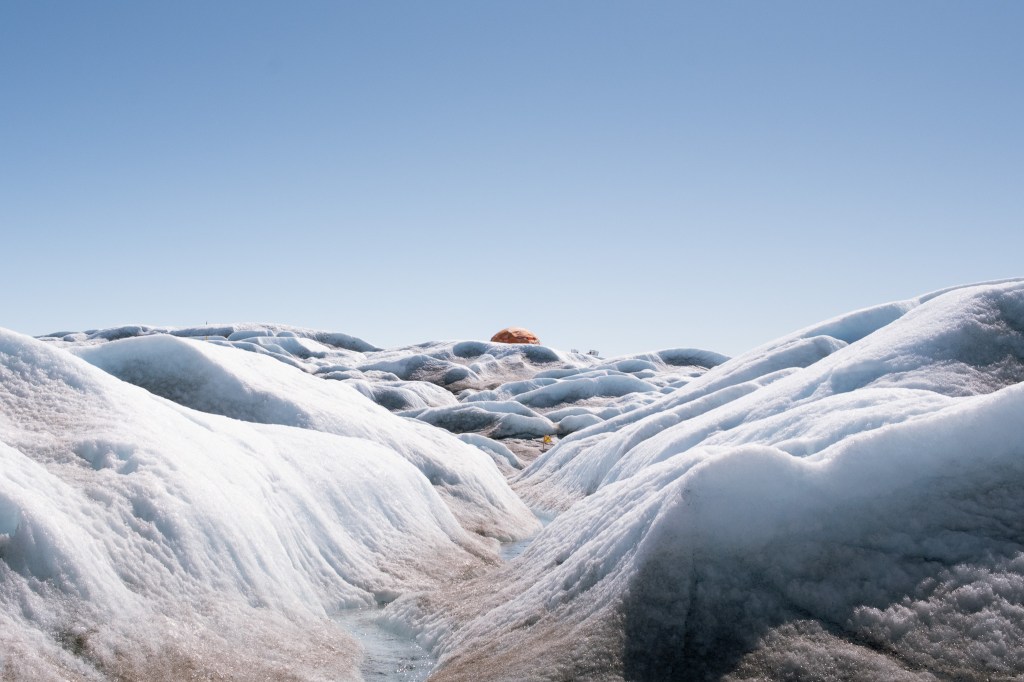
The ice is heart-achingly beautiful and can be quite overwhelming. Fieldwork is emotionally tiring, and it is not uncommon for a tear to be shed, or small arguments. We’re only human, and as such we’re not evolved for life on ice. Be grateful for the company that you have. Share your feelings with someone if things become too intense. Take breaks and journal. You may be so busy that you forget small details. Bring a camera. It doesn’t have to be fancy, but you will be grateful that you took photos. Bring extra socks and plenty of baby wipes. Pack your favourite snacks. Send post cards from Kangerlussuaq or Nuuk if you can, your loved ones will appreciate it. Download music and podcasts for your days off. Eat everything in sight – your life depends on it.
Photos shot on Fujifilm XH2 + Sigma 30mm f/1.4 or Iphone 15.
 Julian Saade - Glaciologist and Photographer
Leave a comment